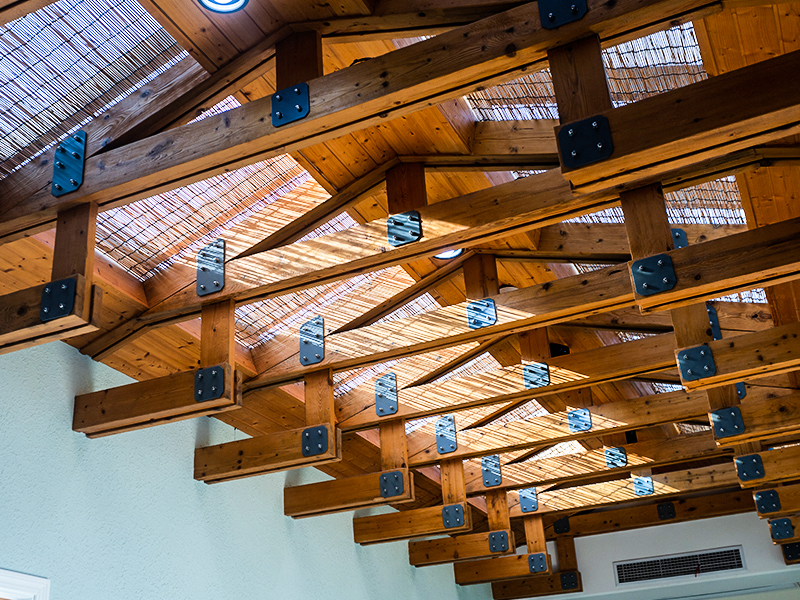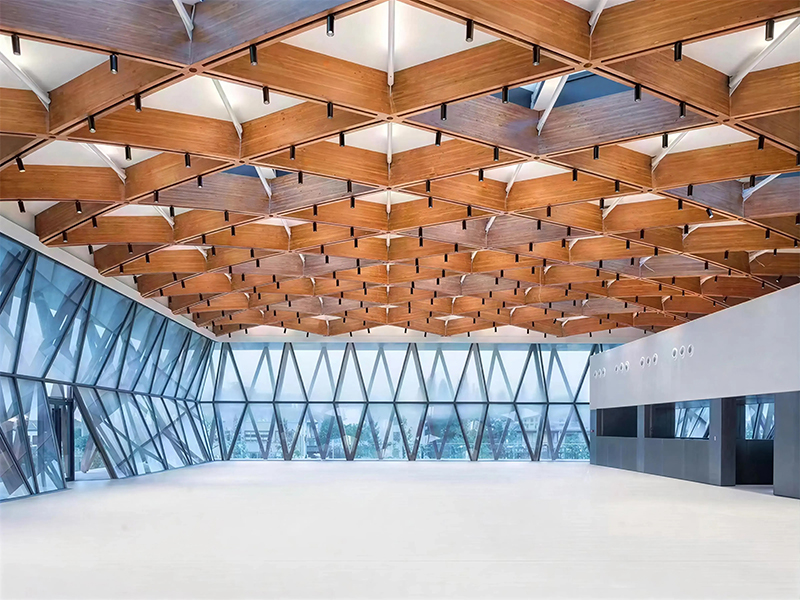


Custom Decorative Wood Trusses
Explore Products
Yancheng State Investment Group was established by the Yancheng Municipal People's Government. As of the end of 2024, the group's total assets will be 80.3 billion yuan, and it currently has 6 functional sectors: energy, resources, hotels, entrepreneurship, trade, and real estate.
About us
Our Company is China Wooden Roof Trusses Suppliers and Decorative Wood Trusses Manufacturers. In 2025, Jiangsen Green Construction was incubated in the Group's entrepreneurial sector. As a new engine for the Group's green transformation, it shoulders the national “dual carbon” strategic mission and the Group's green development plan, demonstrating the social responsibility of state-owned enterprises.
We provide technical services for the entire industrial chain of modern wooden structure research and development, design, intelligent manufacturing, construction, and maintenance, and are committed to providing green, low-carbon, and sustainable wooden structure overall solutions for the domestic and international construction fields.
Factory floor area
Annual output — glulam, CLT & more
Equipment production lines
Number of employees
Press Center
News
Real-time dynamics, one-handed. Here we gather corporate information, industry hot spots and event dynamics to help you quickly understand our development pace and cutting-edge insights.
Industry Knowledge
Wooden roof trusses are essential elements in modern construction, providing both structural support and design flexibility. From residential homes to large commercial or public buildings, wood trusses form the backbone of roofing systems while enabling creative and aesthetically pleasing designs. Decorative wood trusses take this a step further by turning structural elements into architectural features, blending functionality with visual appeal.
Yancheng Jiangsen Green Construction Technology Co., Ltd. specializes in designing, manufacturing, and installing both standard wooden roof trusses and decorative trusses. With full-chain capabilities from R&D to smart manufacturing and installation, the company ensures high-quality, durable, and visually striking timber solutions for construction projects worldwide.
Wooden roof trusses are engineered frameworks that distribute roof loads evenly to the supporting walls, preventing localized stress and structural failure. Unlike conventional framing methods, trusses rely on triangular configurations, which provide exceptional rigidity, stability, and strength. These characteristics allow trusses to span large areas without the need for intermediate supports, creating open, flexible interior spaces ideal for residential, commercial, and public buildings.
The production of wooden roof trusses involves precise cutting, jointing, and sometimes lamination of timber members. Modern manufacturing uses computer-aided design (CAD) and automated assembly systems, ensuring accuracy, structural integrity, and efficient use of materials. With advanced adhesive bonding and timber treatment processes, trusses are resistant to warping, cracking, and environmental degradation.
Yancheng Jiangsen Green Construction Technology Co., Ltd. applies smart production technology to deliver roof trusses with consistent mechanical performance, enabling projects to meet modern building codes and structural standards. Proper installation, combined with high-quality timber, ensures long-term durability. Moisture protection and periodic inspections help maintain integrity over decades, even in varying climatic conditions.
Wooden roof trusses are particularly beneficial in large-span structures. Their lightweight design reduces foundation loads, while still providing high load-bearing capacity. This makes them suitable for homes with vaulted ceilings, open halls, warehouses, and other large-space applications. Moreover, exposed trusses can double as decorative features, integrating seamlessly with interior design without compromising strength.
| Feature | Benefit |
|---|---|
| Load Distribution | Spreads roof weight evenly, preventing stress points |
| Large Span Capability | Supports wide spaces without intermediate columns |
| Lightweight | Reduces foundation and transportation loads |
| Dimensional Stability | Minimizes warping and shrinkage |
| Longevity | High-quality timber and protective treatment extend lifespan |
| Integration Potential | Can accommodate decorative features |
Through these properties, Yancheng Jiangsen Green Construction Technology Co., Ltd. ensures that its wooden roof trusses deliver reliable, durable, and safe solutions for modern building projects.
Decorative wood trusses not only provide structural support but also enhance the visual appeal of a building’s interior. Unlike standard trusses hidden behind ceilings, decorative trusses are often exposed, becoming a key architectural feature. This is particularly valued in residential homes, hotels, auditoriums, and other spaces where aesthetics play an essential role.
One of the main advantages of decorative trusses is their ability to create warm, inviting interiors. Timber’s natural texture and color add elegance and a sense of connection to nature, while carefully crafted joinery or custom shapes can complement any architectural style, from traditional to contemporary. Decorative trusses also allow for open ceilings, giving the perception of larger, more airy spaces.
From a functional standpoint, decorative trusses can be engineered to maintain full structural load-bearing capacity, ensuring safety while serving as a design element. Yancheng Jiangsen Green Construction Technology Co., Ltd. specializes in producing trusses that are both visually striking and structurally reliable. Through smart CAD-based design and precision manufacturing, the company can fabricate complex trusses such as hammerbeam, scissor, or queen post styles, tailored to project-specific requirements.
Decorative wood trusses also optimize timber use. By combining structural and aesthetic functions, fewer materials may be required compared to separate structural and finishing components, increasing efficiency and sustainability. Timber used in decorative trusses can also be sourced sustainably, aligning with modern green building practices and carbon reduction goals.
| Truss Type | Typical Use | Visual Style |
|---|---|---|
| King Post | Small homes, cottages | Simple, classic |
| Queen Post | Medium-span residential | Traditional elegance |
| Hammerbeam | Large halls, churches | Ornate, grand |
| Scissor | Vaulted ceilings | Dramatic and open |
| Fink | Residential roofs | Modern and functional |
By integrating decorative trusses, Yancheng Jiangsen Green Construction Technology Co., Ltd. enables architects and developers to merge structural performance with design creativity, achieving both safety and interior beauty.
Wooden roof trusses and decorative trusses are widely applied across residential, commercial, hospitality, and public buildings. In homes, trusses allow for vaulted ceilings, open-plan layouts, and attic spaces without intermediate columns. They also reduce construction time through prefabrication, where trusses are manufactured in factory conditions and installed on-site with precision.
In commercial buildings and public spaces, decorative trusses enhance aesthetics while maintaining load-bearing functionality. Auditoriums, restaurants, hotels, and office buildings often utilize exposed trusses to create visual impact and convey craftsmanship. Trusses can be designed to complement both contemporary and classical architectural styles, integrating with lighting, HVAC systems, and other building infrastructure without compromising performance.
Yancheng Jiangsen Green Construction Technology Co., Ltd. offers full-chain services from design, material selection, smart manufacturing, and preassembly to on-site installation and maintenance. By leveraging this comprehensive approach, clients benefit from reduced waste, faster construction schedules, and guaranteed quality, while achieving both functional and decorative goals.
Modern engineering also allows for customized truss solutions. Architects can specify unique geometries, intricate connections, and combination truss types, all of which can be fabricated and delivered as modular units. This approach improves installation efficiency, reduces errors, and enables high-quality finishes for both exposed and hidden truss systems.
| Building Type | Truss Use | Notes |
|---|---|---|
| Residential | Structural & decorative | Vaulted ceilings, open layouts |
| Commercial | Decorative | Restaurants, offices, retail spaces |
| Public & Community | Hammerbeam or large spans | Auditoriums, halls |
| Heritage Restoration | King or queen post | Preserves traditional aesthetics |
| Hospitality & Resorts | Exposed scissor or decorative | Enhances interior ambiance |
| Industrial | Structural | Warehouses and large-span facilities |
With Yancheng Jiangsen Green Construction Technology Co., Ltd., every project can achieve optimized structural integrity, elegant design, and sustainable construction, making wooden roof and decorative trusses an ideal solution for modern architectural challenges.
Standard trusses focus solely on load-bearing performance, while decorative trusses also serve as exposed architectural features, combining strength and aesthetics.
Yes, decorative trusses can be engineered to handle significant loads, suitable for both residential and commercial applications.
With high-quality timber, proper treatment, and regular maintenance, wooden trusses can last 50 years or more, often exceeding the lifespan of the roof covering.
Absolutely. They can be customized in traditional, rustic, or modern styles to complement any architectural vision.
Softwoods such as pine, spruce, and fir are commonly used, often laminated or engineered for added strength and dimensional stability.
The company provides full-chain services including R&D, design, smart manufacturing, preassembly, installation, and maintenance, delivering reliable, sustainable, and visually appealing wooden truss solutions for domestic and international clients.

We provide technical services across the entire modern timber structure industrial chain—from R&D, design, and intelligent manufacturing to construction and maintenance—and are committed to delivering green, low-carbon, and sustainable overall solutions for the construction industry both domestically and internationally.
Company Address
Room 1901, Building 1, Xincheng Business Center, Intersection of Haiyang Road and Ruzhe Road, Yandu Subdistrict, Yandu District, Yancheng City, Jiangsu Province, China
Factory Address
Xin'anjiang Road, Dafeng District, Yancheng City, Jiangsu Province
Quick Links
[Mobile]

[Official Account]
[Microsignals]
Stay in touch


 中文简体
中文简体
 English