Why Wood Frame Construction Dominates New Rural Housing Development
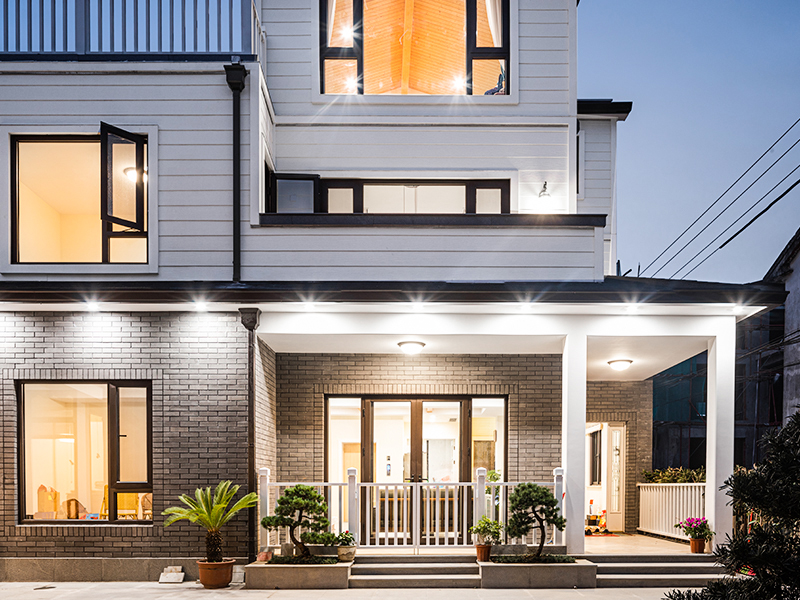
Wood frame construction represents the most practical and cost effective solution for wood-frame new rural housing development, offering material costs 15 to 25 percent lower than concrete or steel alternatives, faster construction timelines averaging 4 to 6 months compared to 8 to 12 months for alternative materials, and superior compatibility with rural construction capabilities and local building traditions. Wood-frame new rural housing provides excellent thermal performance through integrated insulation, durability exceeding 50 years with proper maintenance, and flexibility in design accommodating diverse family sizes and functional requirements ranging from 100 to 300 square meters of living space. The combination of economic efficiency, construction simplicity, environmental sustainability, and proven performance has established wood-frame new rural housing construction as the predominant choice for rural housing initiatives across developing regions.
Understanding Wood-Frame New Rural Housing Construction Fundamentals
Wood-frame new rural housing employs wooden structural members to create skeletal frameworks supporting building loads and enclosing spaces. This ancient building technique, refined through centuries of development, remains particularly well suited to rural housing applications where material availability, construction expertise, and economic constraints shape building decisions. The fundamental principle behind wood-frame new rural housing involves creating rigid structural systems through member interconnection, with properly designed frames capable of accommodating significant loads while remaining economical and accessible to rural construction workers.
Primary Structural Components in Wood-Frame New Rural Housing Systems
Wood-frame new rural housing construction depends on foundation systems transferring building loads to soil, vertical load bearing walls supporting floor and roof weight, floor and roof systems distributing loads to supporting walls, and interconnecting bracing systems providing lateral stability against wind and seismic forces. These integrated components work synergistically to create safe, durable wood-frame new rural housing structures capable of protecting inhabitants from environmental elements while accommodating functional requirements.
Essential structural components include:
- Foundation systems: concrete footings, concrete pads, or raised post foundations distributing loads to soil
- Vertical wall frames: dimensional lumber studs at 400 to 600 millimeter spacing supporting vertical loads
- Horizontal framing: floor joists and roof rafters or trusses spanning between supporting walls
- Lateral bracing: diagonal bracing, shear walls, or moment connections resisting wind and seismic forces
- Connection systems: bolts, nails, and specialized fasteners creating integral structural behavior
- Exterior cladding: wood siding, corrugated metal, or cementitious panels enclosing framed structure
Material Selection Criteria for Wood-Frame New Rural Housing Environments
Wood-frame new rural housing material selection should prioritize locally available materials with proven durability in regional climates, dimensional lumber graded and sorted for structural applications, and cost effectiveness enabling economic feasibility within rural household budgets typically ranging from 15000 to 40000 dollars for complete wood-frame new rural housing construction. Appropriate species selection ensures material compatibility with regional building traditions and established supplier networks for wood-frame new rural housing projects.
Material selection considerations include:
- Species availability: prioritize locally harvested species available through regional suppliers
- Durability characteristics: select species with proven performance in regional climate and soil conditions
- Workability: materials easily workable with hand tools prevalent in rural areas
- Grading standards: properly graded dimensional lumber ensuring structural adequacy
- Cost effectiveness: materials selected to fit rural household budgets without compromising performance
- Moisture content: kiln dried lumber reducing dimensional changes and decay potential
Design Principles for Effective Wood-Frame New Rural Housing Solutions
Successful wood-frame new rural housing design balances functional requirements, economic constraints, cultural preferences, and technical performance objectives. Design excellence for wood-frame new rural housing requires understanding rural household needs, construction capabilities, and environmental conditions shaping housing decisions and occupant satisfaction.
Functional Space Organization and Layout Planning for Wood-Frame New Rural Housing
Wood-frame new rural housing design should organize functional spaces efficiently within compact floor areas of 100 to 200 square meters, incorporating living areas, sleeping spaces, cooking and food preparation, sanitation facilities, and storage areas required for rural household operations including agricultural equipment and product storage. Efficient space organization in wood-frame new rural housing maximizes functional capacity within economic construction budgets while supporting daily household and economic activities.
Essential functional spaces for rural housing include:
- Living and multipurpose space: 20 to 30 square meters for family gathering and activities
- Sleeping spaces: 8 to 10 square meters per bedroom accommodating 2 to 4 occupants
- Kitchen and food preparation: 8 to 12 square meters for cooking and storage
- Sanitation facilities: 4 to 6 square meters for toilet and bathing functions
- Food storage: cool, ventilated space preserving perishable foods
- Agricultural equipment storage: covered space protecting tools and inputs
- Circulation space: stairs, corridors, and pathways enabling access
Climate Adaptation and Environmental Performance
Rural housing design should incorporate climate adaptation strategies including roof overhangs providing solar control and rain protection, cross ventilation enabling passive cooling in hot climates, thermal mass materials moderating temperature swings in extreme climates, and water management systems preventing moisture damage in wet regions. Climate appropriate design enhances comfort, reduces operational costs, and improves durability in challenging rural environments.
Climate adaptation approaches include:
- Tropical humid climates: elevated construction reducing moisture, roof overhangs providing shade, natural ventilation
- Hot dry climates: thick walls providing thermal mass, minimal openings on east and west exposures
- Temperate climates: balanced window area, moderate insulation, passive solar design potential
- Cold climates: insulated construction, minimal openings, thermal mass near heat sources
- Monsoon climates: elevated construction, water management systems, protected entry areas
Cultural and Social Integration in Design
Effective rural housing design incorporates cultural preferences including traditional spatial organization, accommodates extended family living patterns, supports agricultural and livestock integration, and reflects cultural values regarding privacy, gender roles, and social hierarchies. Design respecting cultural contexts achieves higher resident satisfaction and ensures housing supports rather than disrupts traditional social structures.
Cultural integration strategies include:
- Space flexibility: multipurpose areas accommodating various family configurations
- Livestock integration: adjacent animal shelters supporting pastoral economies
- Extended family accommodation: multiple sleeping areas for multigenerational households
- Work space provision: craft activities, small business operations, or agricultural processing
- Social gathering spaces: verandas or courtyards for community interaction
- Sacred spaces: areas for religious practices and spiritual activities
Construction Techniques and Methods for Wood-Frame New Rural Housing Implementation
Successful wood-frame new rural housing construction requires techniques compatible with local labor capabilities, available tools, and material resources. Simplified construction methodologies for wood-frame new rural housing enabling participation by rural workers without advanced technical training enhance community engagement and skill development while reducing construction costs through local labor utilization.
Foundation Design and Construction Methods for Wood-Frame New Rural Housing
Wood-frame new rural housing foundations typically employ concrete strip foundations, concrete pad systems, or raised post foundations on concrete piers, selected based on soil bearing capacity, water table elevation, and regional construction traditions proven effective in local environmental conditions. Simple foundation designs for wood-frame new rural housing minimize complexity while providing adequate load distribution and environmental protection.
Foundation design approaches include:
- Strip foundations: continuous concrete lines beneath load bearing walls suitable for stable soils
- Pad foundations: individual concrete pads beneath post support points reducing material volume
- Post and beam: timber posts on concrete piers enabling elevated construction and thermal isolation
- Monolithic slabs: single concrete pour serving as foundation and floor suitable for level sites
- Moisture barriers: polyethylene or bituminous membranes preventing ground moisture entry
Wall Frame Construction and Assembly for Wood-Frame New Rural Housing
Wood-frame new rural housing walls employ vertical studs typically 50 by 100 millimeters or 75 by 100 millimeters spaced at 400 to 600 millimeter intervals, with horizontal top and bottom plates creating rigid assemblies through nailing or bolting at connection points. This simple and repeatable wood-frame new rural housing approach enables rural workers to participate effectively in construction while creating durable structures.
Wall construction sequence involves:
- Plate layout: marking stud positions on top and bottom plates at regular intervals
- Stud installation: placing vertical members between top and bottom plates
- Fastening: securing connections through nailing or bolting at 150 to 200 millimeter spacing
- Plumb and straightness: verifying vertical alignment and maintaining plane straightness
- Bracing: installing temporary or permanent bracing providing lateral stability
- Opening formation: creating window and door openings with header support structures
Floor and Roof System Installation
Floor systems employ floor joists spanning between supporting walls with spacing and depth determined by span length and load requirements, while roof systems use common or trussed rafters creating pitched roofs enabling rain drainage and weather protection. Pitched roof systems prove particularly valuable in high rainfall regions while providing attic space for storage or climate control.
Floor and roof construction elements include:
- Floor joists: 50 by 150 millimeters to 50 by 300 millimeters timber members spanning walls
- Joist spacing: 400 to 600 millimeter intervals supporting floor loads and reducing deflection
- Common rafters: sloped members creating pitched roofs with adjustable slope angles
- Roof trusses: prefabricated assemblies reducing field work and simplifying construction
- Roof slope: minimum 25 percent slope ensuring adequate water drainage in wet climates
- Collar ties and bracing: horizontal members preventing rafter spreading and improving stability
Cost Analysis and Economic Feasibility for Wood-Frame New Rural Housing Projects
Economic feasibility represents critical factor determining wood-frame new rural housing project success and community acceptance. Comprehensive cost analysis for wood-frame new rural housing including material, labor, and overhead components enables realistic budgeting and identification of cost reduction opportunities maintaining quality standards.
Material Cost Components and Estimation for Wood-Frame New Rural Housing
Typical wood-frame new rural housing material costs range from 40 to 60 percent of total construction costs, with structural lumber representing 25 to 35 percent, roof covering 10 to 15 percent, and finishing materials 10 to 20 percent depending on design complexity and specification levels. Accurate material estimation for wood-frame new rural housing enables realistic budgeting and identification of cost optimization opportunities.
Material cost categories include:
- Structural lumber: foundation beams, studs, joists, and rafters forming building skeleton
- Roof covering: corrugated metal, thatch, or tile creating weather protection
- Wall cladding: wood siding, corrugated metal, cementitious boards, or infill materials
- Floor materials: wooden boards, concrete, or compacted earth finishing floor surfaces
- Fasteners: nails, bolts, and specialized connectors creating structural connections
- Finishing materials: doors, windows, paints, and architectural elements completing structures
Labor Cost Analysis and Workforce Planning
Labor costs typically represent 30 to 50 percent of rural housing construction costs, with skilled supervision and specialized tasks commanding higher daily rates of 20 to 40 dollars while general labor costs 5 to 15 dollars daily depending on regional economic conditions and labor availability. Effective workforce organization and training programs reduce labor costs while building community capacity.
Workforce planning considerations include:
- Skilled supervision: carpenters and site supervisors ensuring quality and safety
- General labor: community members performing repetitive tasks under supervision
- Training programs: building local capacity and reducing long term labor costs
- Work scheduling: planning construction sequence enabling efficient labor utilization
- Safety protocols: protecting workers from injuries and liabilities
- Productivity optimization: organizing work reducing labor hours per unit output
Cost Optimization Strategies for Limited Budgets
Cost reduction strategies for rural housing include phased construction enabling initial occupation with subsequent improvements, standardized designs reducing engineering costs, local material sourcing eliminating transportation expenses, and community labor participation reducing paid labor requirements by 20 to 40 percent. Strategic cost management enables housing achievement within challenging rural economic constraints.
Cost optimization approaches include:
- Standardized designs: reducing design fees and enabling efficient material ordering
- Local sourcing: eliminating transportation costs and supporting local economies
- Phased construction: initial core structure followed by subsequent additions and improvements
- Community participation: local labor reducing paid labor requirements
- Material substitution: alternative materials meeting performance while reducing costs
- Self provisioning: families providing labor reducing total monetary requirements
Building Performance and Durability for Wood-Frame New Rural Housing in Rural Environments
Long term wood-frame new rural housing performance depends on appropriate design decisions, quality construction, effective maintenance, and material durability in regional climate and environmental conditions. Understanding performance factors for wood-frame new rural housing enables decision making extending housing lifespan and reducing lifecycle costs.
Moisture Management and Decay Prevention
Moisture represents primary threat to wood frame durability in tropical and humid regions, requiring elevated construction, adequate ventilation, protective coatings, and regular maintenance preventing wood decay and structural failure. Proper moisture management extends structural lifespan beyond 50 years while inadequate protection reduces durability to 15 to 25 years requiring major repairs or replacement.
Moisture protection strategies include:
- Elevated construction: raising structures above ground reducing soil moisture contact
- Ventilation: underfloor ventilation removing accumulated moisture
- Protective coatings: paint or sealant applications preventing moisture penetration
- Roof overhangs: adequate projection protecting walls from rain penetration
- Gutters and drainage: directing roof water away from structural elements
- Maintenance: regular inspection and repair preventing progressive moisture damage
Thermal Performance and Energy Efficiency
Wood frame construction provides excellent thermal performance through integrated insulation achieving U values of 0.2 to 0.4 watts per square meter per Kelvin for wall assemblies, reducing heating and cooling requirements while improving comfort and reducing operational costs. Proper insulation design and installation prove particularly valuable in cold climates where heating costs dominate household budgets.
Thermal performance improvements include:
- Wall insulation: 50 to 150 millimeters mineral wool or natural fiber materials
- Ceiling insulation: 100 to 200 millimeters achieving greater values due to accessible locations
- Window selection: double glazing or secondary glazing in cold regions reducing heat loss
- Air tightness: sealing gaps and leaks reducing infiltration losses
- Thermal mass: high mass materials moderating temperature variations in extreme climates
- Passive design: window orientation and building shape optimizing natural heating and cooling
Structural Stability and Wind Resistance
Wood frame structures properly designed and constructed demonstrate excellent wind resistance through rigid connections, diagonal bracing, and moment resistant joints withstanding wind pressures typical in tropical storms and moderate earthquakes. Appropriate structural design ensures safety and minimizes storm damage in high wind regions.
Wind resistance improvements include:
- Foundation anchorage: bolting wall plates to foundations preventing uplift
- Roof attachment: securing roof to wall structure preventing separation under wind loads
- Diagonal bracing: cross bracing or shear walls providing lateral stability
- Connection design: moment resistant connections transferring forces efficiently
- Aerodynamic form: pitched roofs and rounded edges reducing wind suction forces
- Regular inspection: identifying and repairing damage maintaining structural integrity
Implementation Strategies for Successful Wood-Frame New Rural Housing Programs
Successful wood-frame new rural housing implementation requires comprehensive planning addressing community engagement, training provision, material supply chains, quality assurance, and supportive policy environments. Systematic approaches to wood-frame new rural housing maximize project success and achieve sustainable housing improvements.
Community Engagement and Participation Models for Wood-Frame New Rural Housing
Effective wood-frame new rural housing programs employ participatory models encouraging community decision making, ensuring cultural appropriateness, and building local capacity through skills training and knowledge transfer supporting long term sustainability beyond project completion. Community ownership and participation in wood-frame new rural housing projects prove essential for housing project success and resident satisfaction.
Community engagement approaches include:
- Participatory design: community input on functional space requirements and preferences
- Labor participation: community members contributing work reducing external labor requirements
- Training programs: skills development enabling ongoing maintenance and future construction
- Quality monitoring: community participation in inspection ensuring construction standards
- Cost sharing: financial contributions building community investment and commitment
- Local procurement: purchasing from community suppliers strengthening local economies
Material Supply and Logistics Management
Reliable material supply chains prove essential for construction continuity and schedule achievement, requiring advance procurement planning, transport coordination, and storage provisions preventing material damage and minimizing waste during construction execution. Effective logistics management optimizes costs and reduces construction delays common in remote rural locations.
Supply chain management elements include:
- Advance ordering: procuring materials based on construction schedules preventing shortages
- Local sourcing: prioritizing local suppliers reducing transportation costs
- Quality assurance: receiving inspection confirming material quality and specifications
- Secure storage: protected areas preventing material damage from weather and theft
- Just in time delivery: synchronizing deliveries with construction needs reducing storage
- Transport coordination: organizing vehicle movement maximizing efficiency
Quality Control and Inspection Procedures
Systematic quality control procedures employing trained inspectors, standardized checklists, and transparent processes ensure construction meets specifications protecting occupant safety and building performance. Regular inspection enables early identification and correction of deficiencies preventing costly rework and structural problems.
Quality control measures include:
- Foundation inspection: verifying levelness, dimensions, and bearing capacity
- Framing inspection: confirming member sizing, spacing, and proper connections
- Roof installation: verifying slope, fastening, and proper water shedding
- Connection inspection: detailed examination of nailing, bolting, and attachment adequacy
- Moisture barriers: confirming proper installation of waterproofing systems
- Final inspection: comprehensive review confirming overall structure meets standards
Technical Capacity Building and Skill Development
Training programs developing rural carpentry and construction skills build long term community capacity enabling future housing construction, maintenance, and repairs supporting ongoing housing improvements and economic opportunity creation. Skills development represents critical success factor for sustainable rural housing advancement.
Training program components include:
- Basic carpentry: measuring, marking, cutting, and fastening techniques
- Structural principles: understanding load paths and connection requirements
- Specification reading: interpreting drawings and construction documents
- Safety protocols: proper tool use and hazard prevention procedures
- Quality standards: inspecting work and identifying deficiencies
- Entrepreneurship: business planning for construction activities
Environmental Sustainability and Green Building Practices for Wood-Frame New Rural Housing
Sustainable wood-frame new rural housing design incorporates renewable materials, reduces environmental impact, and supports ecosystem conservation while meeting functional housing requirements. Environmental stewardship in wood-frame new rural housing ensures housing development benefits rather than harms surrounding communities and natural systems.
Sustainable Material Selection and Sourcing for Wood-Frame New Rural Housing
Sustainable wood-frame new rural housing prioritizes renewable wood from managed forests, locally sourced materials reducing transportation impacts, natural insulation materials from agricultural byproducts, and materials supporting local economic development through local supplier relationships. Careful material selection in wood-frame new rural housing projects achieves environmental and economic benefits simultaneously.
Sustainable material approaches include:
- Certified timber: FSC or equivalent certification ensuring sustainable forest management
- Local sourcing: reducing transportation emissions and supporting local economies
- Natural insulation: rice husks, bamboo fibers, or agricultural waste materials
- Recycled content: incorporating reclaimed or recycled materials where appropriate
- Low impact finishes: natural oils and water based paints reducing chemical emissions
- Durable design: long lasting structures minimizing replacement and waste
Water Management and Sanitation Systems
Integrated water management systems including rainwater harvesting, greywater reuse, and appropriate sanitation facilities protect environmental quality while providing water security and reducing municipal utility dependence in rural areas lacking infrastructure. On site water management proves particularly valuable in water scarce regions and areas lacking municipal services.
Water management elements include:
- Rainwater harvesting: capturing roof runoff for domestic use or irrigation
- Greywater systems: treating and reusing water from washing and bathing
- Composting toilets: functioning without water reducing contamination risk
- Constructed wetlands: treating wastewater through ecological processes
- Infiltration systems: enabling groundwater recharge through permeable surfaces
- Water storage: tanks ensuring year round water availability
Energy Efficiency and Renewable Energy Integration
Energy efficient building design minimizing heating and cooling loads combined with renewable energy systems including solar thermal hot water, photovoltaic generation, or biogas production enables rural housing achieving energy independence and reducing operational costs. Renewable energy integration proves particularly valuable in remote locations lacking reliable electrical grid access.
Energy efficiency strategies include:
- Passive design: optimizing window placement, ventilation, and thermal mass
- Insulation: minimizing heat loss through walls, ceilings, and roofs
- Solar thermal: capturing solar energy for hot water heating
- Photovoltaic systems: converting sunlight directly to electricity
- Natural ventilation: enabling cooling without mechanical systems
- Efficient appliances: selecting equipment minimizing energy consumption
Policy Support and Institutional Framework for Wood-Frame New Rural Housing Advancement
Successful wood-frame new rural housing development requires supportive policy frameworks, access to financing, technical standards development, and institutional mechanisms enabling sustained housing improvement. Policy environments shape feasibility and pace of wood-frame new rural housing advancement across developing regions.
Financing Mechanisms and Credit Access for Wood-Frame New Rural Housing
Wood-frame new rural housing advancement requires accessible financing mechanisms including microfinance loans, government housing subsidies, cooperative credit systems, and community savings groups enabling rural households building homes without immediate cash payment unaffordable for poor populations. Appropriate financing structures for wood-frame new rural housing prove essential for housing access by low income rural families.
Financing approaches include:
- Microfinance: small loans at reasonable interest rates for incremental construction
- Government subsidies: direct support for low income household housing
- Cooperative financing: community credit systems reducing interest costs
- Remittance facilitation: enabling diaspora family support for housing investment
- In kind contributions: accepting labor and materials as loan collateral alternatives
- Revolving funds: housing improvements generating repayment resources
Technical Standards and Building Codes
Appropriate technical standards balancing safety requirements with economic feasibility enable quality construction while remaining affordable for rural households, with standards tailored to regional conditions and local materials availability rather than urban code application. Realistic standards facilitate compliance and construction quality while avoiding cost burdens preventing housing achievement.
Standards development considerations include:
- Performance based standards: specifying outcomes rather than prescriptive methods
- Local adaptation: tailoring to regional materials and climate conditions
- Affordability focus: avoiding unnecessary specifications increasing costs
- Enforcement capacity: standards feasible to enforce with available resources
- Technology appropriateness: specifications matching local construction capabilities
- Regular review: updating standards reflecting experience and technology improvements
Institutional Support and Technical Services
Rural housing advancement requires institutional support including extension services providing technical guidance, demonstration projects showing feasible solutions, quality materials access through cooperative purchasing, and dispute resolution mechanisms addressing construction conflicts. Institutional frameworks enable sustained housing improvement extending beyond individual project completion.
Institutional support mechanisms include:
- Extension services: technical advisors providing design and construction guidance
- Demonstration projects: visible examples motivating community participation
- Material procurement: cooperative or government purchasing improving access and reducing costs
- Training programs: building local technical capacity and professional development
- Quality monitoring: independent verification ensuring construction standards
- Dispute resolution: processes addressing conflicts and protecting household interests

 中文简体
中文简体
 English