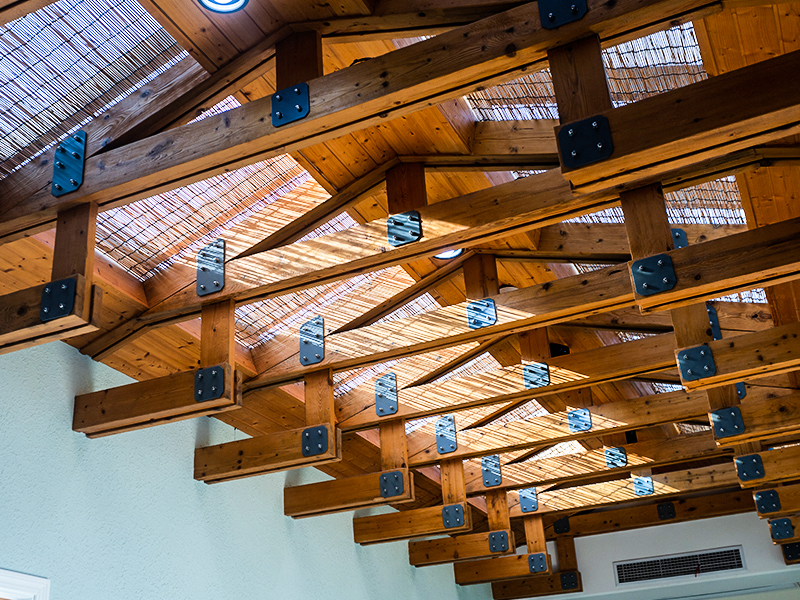
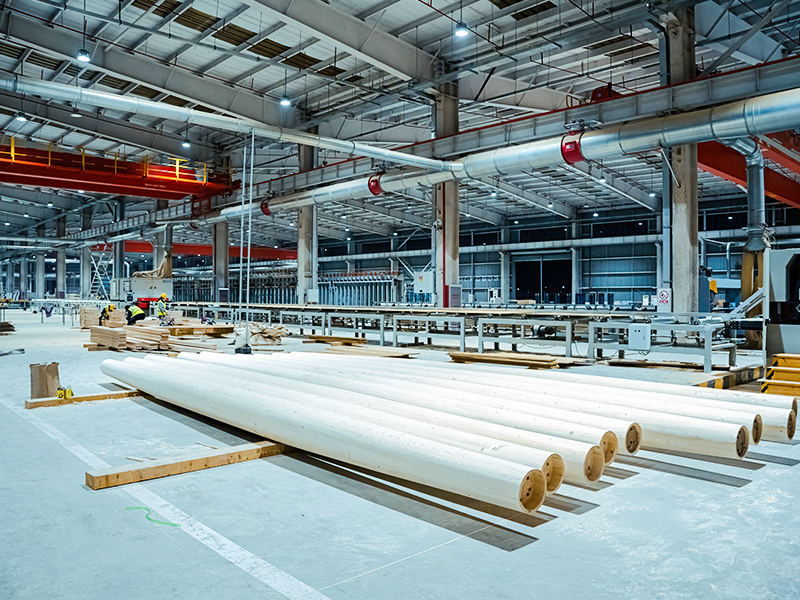
Wood-frame construction remains the dominant building method for low- and mid-rise structures across North America, Scandinavia, Japan, and New Zealand — and for good reason. It is faster to erect than concrete or steel, requires less specialized labor, performs exceptionally well in seismic zones when properly engineered, and carries one of the lowest embodied carbon footprints of any structural system in widespread use. In the United States alone, roughly 90% of new single-family homes and a growing share of mid-rise multifamily buildings are built using wood framing. That figure has held remarkably steady for decades, even as competing materials have made aggressive inroads into commercial construction.
How Wood-Frame Structural Systems Work
A wood-frame building transfers loads through a network of closely spaced timber members — studs, joists, rafters, and plates — rather than through discrete columns and beams. This "platform framing" approach, which became the North American standard in the mid-19th century, divides a building into horizontal platforms (floors) stacked atop one another, with each storey's walls bearing the load of the storey above.
The structural logic is one of redundancy rather than individual member strength. No single stud or joist carries a dominant share of the load — forces are shared across many members, so the failure of one element rarely compromises the system. This redundancy is part of why wood-frame structures tend to perform well under the distributed, dynamic loads imposed by earthquakes and wind.
Platform Framing vs. Balloon Framing
Platform framing replaced balloon framing as the dominant wood construction method by the mid-20th century. In balloon framing — common in 19th-century buildings — studs ran continuously from foundation to roof, creating open cavities that acted as vertical chimneys for fire. Platform framing interrupts these cavities at each floor level, inherently providing fire blocking and simplifying construction sequencing. Nearly all modern wood-frame buildings use platform framing or a hybrid variant.
Shear Walls and Lateral Load Resistance
The structural element most critical to a wood-frame building's performance under lateral forces — wind and seismic — is the shear wall. A shear wall is a framed wall panel sheathed with structural panels (typically oriented strand board or plywood) and connected to the foundation and floor diaphragms through a system of hold-downs, anchor bolts, and straps. When a lateral force pushes a building sideways, the shear walls resist racking by acting as a series of deep beams oriented vertically.
Proper shear wall layout is arguably the most consequential structural decision in wood-frame design. Shear walls must be distributed symmetrically in plan to avoid torsional response, and their cumulative capacity must be matched to the anticipated seismic or wind demand at the site. In high-seismic zones such as the Pacific Coast of North America or New Zealand, it is common to see wood-frame buildings with extensive hold-down hardware, strong-back systems, and purpose-designed connectors at every critical joint.
Types of Wood Framing and Their Applications
Wood-frame construction is not a single system but a family of related approaches, each suited to different building types, storey heights, and performance requirements. Understanding the distinctions helps clarify why a system appropriate for a single-family home may not be the right choice for a six-storey mixed-use building.
Light Wood Framing (Stick Framing)
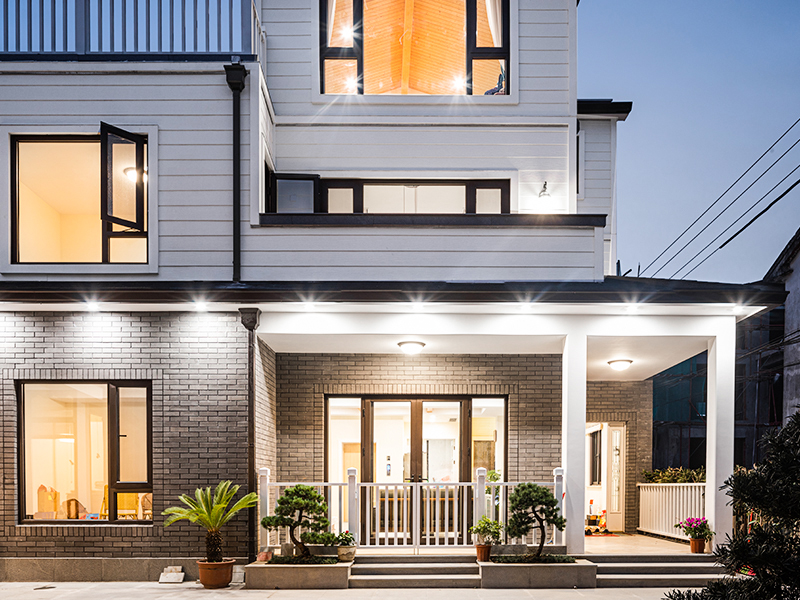
Light wood framing uses dimensional lumber — typically 2×4 or 2×6 studs spaced 16 or 24 inches on center — and is the system used in the vast majority of residential construction worldwide. Its primary advantages are the low cost and universal availability of materials, the broad familiarity of the construction workforce, and the speed with which a framed structure can be enclosed. A skilled crew can frame a typical two-storey house in a matter of days.
Light framing is constrained by the dimensional properties of solid-sawn lumber. Solid timber is subject to shrinkage, warping, and splitting, and its structural properties vary with grain orientation, moisture content, and the presence of knots. These limitations drove the development of engineered lumber products, which have progressively replaced solid-sawn members in floor systems and long-span applications.
Engineered Wood Products in Framing
Engineered wood products include laminated veneer lumber (LVL), wood I-joists, parallel strand lumber (PSL), and oriented strand board (OSB). Each redistributes the natural variability of wood across a manufactured composite, producing members with more predictable, consistent structural properties than solid timber.
- LVL (Laminated Veneer Lumber): Veneers glued with grain parallel, producing a beam or header with high bending strength and minimal variability. Commonly used for long-span headers above garage doors and window openings.
- Wood I-joists: An OSB web bonded between LVL flanges, creating a lightweight floor joist capable of spanning 20–30 feet with minimal deflection. They have largely replaced solid-sawn floor joists in residential construction.
- PSL (Parallel Strand Lumber): Long wood strands bonded in parallel, producing very high-density beams suitable for columns and heavily loaded beams in both residential and light commercial applications.
- OSB (Oriented Strand Board): The workhorse sheathing panel of modern framing, replacing plywood in most wall and floor applications due to its lower cost and consistent availability.
Mass Timber: Redefining What Wood Can Build
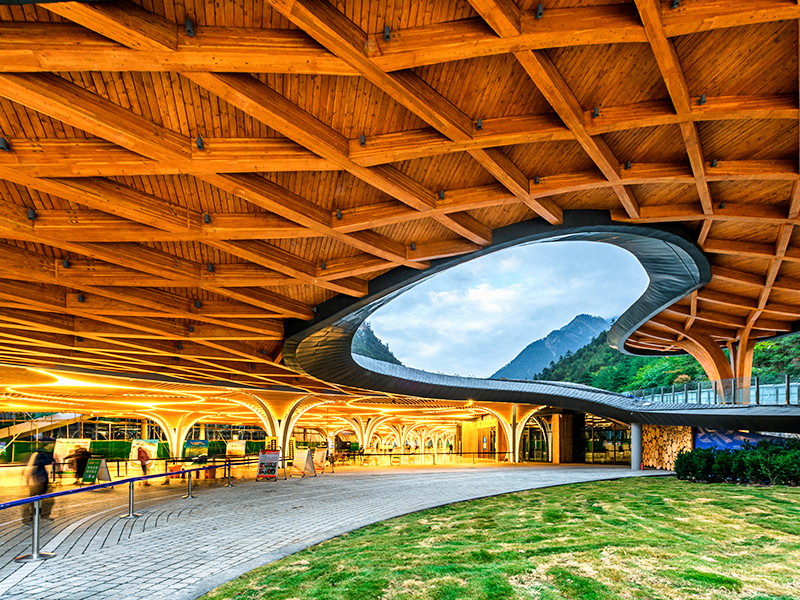
Mass timber is the most significant development in wood construction of the past two decades. Unlike light framing — where structural performance depends on the assembly of many small members — mass timber uses large, solid or laminated panels and beams as primary structural elements. The leading mass timber product is cross-laminated timber (CLT), which consists of layers of dimension lumber bonded perpendicular to each other in alternating orientations, producing a panel that resists forces in two directions and can function as a floor, wall, or roof slab.
The adoption of mass timber has enabled wood-frame buildings to reach heights previously restricted to concrete and steel. The 2021 update to the International Building Code introduced new occupancy categories specifically for tall wood buildings, permitting wood structures up to 18 storeys under certain conditions with appropriate fire protection. Several completed buildings have demonstrated this potential: an 18-storey student residence in Vancouver and a 25-storey residential tower in Milwaukee are among the tallest mass timber structures in the world as of the mid-2020s.
Comparing Wood-Frame to Other Structural Systems
Choosing a structural system involves trade-offs across cost, schedule, labor availability, site constraints, and long-term performance. The following table provides a direct comparison of wood framing against the two most common alternatives — cast-in-place concrete and structural steel — across the dimensions most relevant to a building owner or developer.
| Factor |
Wood Frame |
Cast-in-Place Concrete |
Structural Steel |
| Typical Cost (per sq ft, mid-rise) |
$180–$280 |
$220–$360 |
$240–$400 |
| Construction Speed |
Fast (no cure time) |
Slow (28-day cure cycles) |
Fast (pre-fabricated) |
| Embodied Carbon |
Low (carbon storage) |
High |
Moderate–High |
| Seismic Performance |
Excellent (ductile, light) |
Good (when well-detailed) |
Excellent (ductile) |
| Fire Resistance (unprotected) |
Low (light frame); Moderate (mass timber) |
High |
Low (loses strength rapidly) |
| Moisture Sensitivity |
High (if unprotected) |
Low |
Moderate (corrosion risk) |
| Maximum Practical Height |
Up to 18 storeys (IBC 2021) |
Unlimited |
Unlimited |
| Workforce Availability |
Very broad |
Moderate |
Specialized |
Comparative overview of wood frame, concrete, and steel structural systems across key development factors
The cost advantage of wood framing is most pronounced in the 3-to-8-storey range — the building type increasingly referred to as "mid-rise." At this scale, the structural demands do not yet require the robust lateral systems that drive up the cost of concrete and steel, and wood's speed advantage over concrete (no cure time, faster enclosure) translates directly into schedule savings and reduced financing costs during construction.
Fire Performance: Separating Fact from Assumption
Fire risk is the most commonly cited concern about wood-frame construction, and it deserves careful examination rather than dismissal. The concern is legitimate in some contexts and overstated in others, and the distinction matters enormously for building policy, insurance underwriting, and design decisions.
The Vulnerability Window: Construction Phase Fires
The period of greatest fire risk in a wood-frame building is during construction — after framing is complete but before fire protection systems (sprinklers, gypsum board encapsulation) are installed. Data from the U.S. Fire Administration indicates that construction-phase fires in wood-frame buildings are disproportionately large compared to fires in completed structures, with losses sometimes reaching tens of millions of dollars in a single incident. Several high-profile fires at large multifamily wood-frame projects under construction in U.S. cities have reinforced this concern.
The risk mitigation strategies for construction-phase fires are well understood: temporary fire suppression systems during construction, strict hot-work permitting, controlled site access, and maintaining clear access routes for fire apparatus. These measures add modest cost but substantially reduce risk exposure.
Completed Buildings: The Role of Gypsum and Sprinklers
Once a wood-frame building is completed and its fire protection systems are functional, its fire performance profile changes significantly. Gypsum wallboard (drywall) is the primary passive fire protection in light wood-frame construction — it insulates framing members from heat and delays ignition. A single layer of 5/8-inch Type X gypsum provides approximately one hour of fire resistance; double layers can achieve ratings of up to two hours.
Automatic fire sprinkler systems are the most effective active fire suppression measure available. Building codes in most jurisdictions now mandate sprinklers in new multifamily wood-frame buildings of three storeys or more, and the data supports their effectiveness: sprinklers reduce the risk of death in a reported structure fire by approximately 81%, according to the National Fire Protection Association. In a properly sprinklered and gypsumenclosed wood-frame building, the fire risk profile is comparable to other construction types.
Mass Timber's Counterintuitive Fire Behavior
Mass timber behaves differently under fire than light wood framing. Large timber members char at a predictable rate — approximately 1.5 inches per hour — and this char layer acts as an insulator, slowing combustion and preserving the structural core. This "char and survive" behavior means that an exposed mass timber beam retains meaningful load-carrying capacity long after steel would have softened and concrete would have spalled. Engineers can design for this by adding sacrificial char allowances to member sizing — a well-established technique in heavy timber design.
This property has led several jurisdictions to permit exposed CLT ceilings and beams in finished spaces — a significant aesthetic advantage over concrete and steel, which typically require encapsulation for fire rating purposes.
Moisture Management: The Most Consequential Long-Term Challenge
If fire is the most discussed risk in wood-frame construction, moisture is arguably the most consequential for long-term building performance. Wood is hygroscopic — it absorbs and releases moisture in response to changes in ambient humidity. When moisture content in wood framing exceeds approximately 19%, conditions become favorable for mold growth; above 28–30%, wood-decaying fungi can establish and begin structural degradation.
Moisture enters a building enclosure through several pathways: bulk water infiltration (rain, snowmelt), vapor diffusion through the building envelope, condensation within wall and roof assemblies, and construction moisture in framing that has not dried to equilibrium before enclosure. Each pathway requires a specific design response.
Designing Walls That Dry
The foundational principle of moisture-resilient wood-frame design is to build assemblies that can dry to at least one side if they get wet. A wall assembly that traps moisture between impermeable layers — for example, a vapor barrier on the interior and an impermeable rigid foam on the exterior — can hold moisture from construction or incidental infiltration with no drying potential, leading to hidden rot and mold.
The correct approach depends on climate. In cold climates (predominantly heating), the bulk of insulation should be placed outside the structural framing to keep the sheathing warm and above the dew point. In hot-humid climates (predominantly cooling), vapor retarders on the interior face of walls reduce inward vapor drive during cooling season. Mixed climates require assemblies that can manage both. Building science organizations such as the Building Science Corporation have published extensive guidance on climate-specific wall assembly strategies.
Rainscreen Cladding as a Drying Strategy
A rainscreen wall system interposes a ventilated air gap between the cladding and the water-resistive barrier (WRB) behind it. This gap serves two functions: it allows bulk water that penetrates the cladding to drain out before reaching the WRB, and it allows airflow to dry moisture that has accumulated on the back of the cladding or face of the WRB. Rainscreen systems have become the preferred cladding approach in high-rainfall climates such as the Pacific Northwest, British Columbia, and coastal Europe, where driving rain loads on building envelopes are severe.
The air gap in a rainscreen system need not be large — even a 3/8-inch (10mm) cavity provides meaningful drainage and drying capacity. For taller buildings where stack effect can drive significant airflow through the cavity, the gap may need to be designed more carefully to avoid fire spread — a detail that has received increased attention in codes governing wood-frame mid-rise construction.
Seismic Performance of Wood-Frame Buildings
Wood-frame buildings have a strong historical record in seismic events, primarily because of two inherent properties: low mass and structural ductility. A lighter building generates smaller inertial forces during ground shaking, reducing demand on the lateral force-resisting system. And wood connections — nails, bolts, and metal connectors — can deform plastically without fracturing, absorbing earthquake energy through controlled yielding rather than brittle failure.
The 1994 Northridge earthquake in southern California is the most extensively studied seismic event for wood-frame performance. While many wood-frame structures suffered damage, relatively few collapsed, and damage was concentrated in specific building types with known vulnerabilities — particularly soft-story apartment buildings with open parking at ground level and buildings with inadequate connections between floor diaphragms and shear walls.
Soft-Story Vulnerability and Retrofit Programs
The "soft story" condition — a building storey with significantly less lateral stiffness than the storeys above, typically because the ground floor is open for parking or retail — is a well-documented vulnerability in older wood-frame multifamily buildings. When subjected to seismic loading, these buildings concentrate deformation in the weak storey, sometimes leading to collapse of the ground level with the upper storeys riding down nearly intact.
Cities including Los Angeles and San Francisco have enacted mandatory soft-story retrofit ordinances, requiring owners of pre-1978 wood-frame apartment buildings with soft-story conditions to strengthen their ground-floor lateral systems. Los Angeles alone identified over 13,500 buildings requiring retrofit under its program. The typical retrofit adds steel moment frames or shear panels at the ground level, often without displacing existing tenants — a logistical achievement that has become a specialty practice within the structural engineering community.
Modern Seismic Detailing Requirements
Contemporary building codes in high-seismic regions require wood-frame buildings to meet detailed prescriptive or engineered requirements for shear wall length, aspect ratio, hold-down hardware, diaphragm nailing, and continuity of the load path from roof to foundation. These requirements have been progressively tightened following each major seismic event, and new construction designed to current codes in seismically active regions has generally performed well in recent earthquakes in North America, New Zealand, and Japan.
Energy Performance and Thermal Considerations
Wood has a significantly lower thermal conductivity than concrete or steel — roughly 0.12 W/m·K for dry timber, compared to 1.7 W/m·K for concrete and 50 W/m·K for steel. This means that wood framing itself contributes less to thermal bridging than competing structural materials. However, the energy performance of a wood-frame wall is determined primarily by the insulation strategy, not the framing material.
Thermal Bridging Through Framing
In a standard 2×6 stud wall insulated with fiberglass batt, the framing members themselves — studs, plates, and headers — occupy roughly 20–25% of the wall area and have considerably lower thermal resistance than the insulated cavities. This "framing fraction" reduces the effective whole-wall R-value significantly below the nominal cavity R-value. For a wall nominally rated R-21 in the cavity, the whole-wall effective R-value with typical framing is closer to R-14 to R-16.
The most effective solution is continuous insulation — a layer of rigid foam or mineral wool applied to the exterior face of the sheathing, covering the framing members and breaking the thermal bridge. Adding 2 inches of continuous rigid insulation to a 2×6 stud wall can improve its effective whole-wall R-value by 30–40% while simultaneously improving moisture management by keeping the sheathing warmer. This approach is now standard in high-performance wood-frame construction and increasingly required by energy codes in cold climates.
Advanced Framing Techniques
Advanced framing (also called optimum value engineering or OVE) reduces the amount of wood in a wall assembly, which simultaneously reduces thermal bridging and material cost while increasing the proportion of the wall that can be filled with insulation. Key advanced framing techniques include:
- Spacing studs 24 inches on center rather than 16 inches, reducing framing fraction from ~25% to ~18%
- Using single top plates rather than double, aligned with floor framing above to maintain continuous load path
- Eliminating unnecessary jack studs and cripples at window and door openings through engineered header sizing
- Using two-stud corners with blocking rather than traditional three- or four-stud corners, improving insulation access at corner junctions
Studies have found that advanced framing can reduce framing material by 15–20% and improve wall thermal performance by 10–15%, with no meaningful reduction in structural performance when properly engineered.
Wood-Frame Buildings and Embodied Carbon
As the construction industry grapples with its contribution to global carbon emissions — the built environment accounts for approximately 40% of global energy use and 11% of energy-related CO₂ emissions from materials and construction — wood-frame buildings have attracted renewed attention for their carbon profile.
Wood is unique among structural materials in that it stores carbon rather than emitting it during production. Trees sequester atmospheric CO₂ as they grow, and that carbon remains locked in the wood for as long as the building stands. Studies comparing the life-cycle carbon of structural systems consistently find that wood-frame and mass timber buildings have substantially lower embodied carbon than equivalent concrete or steel structures.
A life-cycle assessment comparing a six-storey wood-frame building to a structurally equivalent concrete building found that the wood building stored approximately 180 kg of CO₂ equivalent per square meter of floor area, while the concrete building emitted approximately 280 kg CO₂ equivalent per square meter — a difference of nearly 460 kg CO₂e/m² when accounting for both stored carbon and avoided emissions. At scale, this represents a substantial climate benefit.
The caveat to this analysis is the importance of sourcing. The carbon benefit of wood construction is contingent on the timber being harvested from sustainably managed forests where harvested trees are replaced by growing trees that continue to sequester carbon. Certification schemes such as the Forest Stewardship Council (FSC) and Sustainable Forestry Initiative (SFI) provide third-party verification of sustainable sourcing, and specifiers increasingly require certification for structural timber on low-carbon building projects.
Acoustic Performance Challenges and Solutions
Acoustic performance is an area where light wood-frame construction faces genuine challenges relative to concrete. Mass is the primary determinant of airborne sound transmission loss — heavier assemblies transmit less sound. A 6-inch concrete slab has vastly more mass than a wood-floor assembly, giving it inherent acoustic advantages for both airborne sound (speech, music) and impact sound (footfall).
In multifamily wood-frame buildings, inadequate acoustic separation between units is one of the most frequent complaints from residents and a leading driver of warranty claims. Meeting minimum code requirements (typically an STC rating of 50 and an IIC rating of 50 for floor-ceiling assemblies) is achievable with standard wood-frame construction, but providing the performance levels that occupants actually find satisfactory requires more deliberate design.
Strategies for Improved Acoustic Performance
The most effective acoustic improvements in wood-frame floor assemblies combine several complementary measures:
- Resilient channels or clips between the structural floor and the ceiling below, decoupling the ceiling from the structure and reducing flanking transmission of impact noise
- Acoustic insulation in floor cavities — mineral wool rather than fiberglass provides better mid-frequency absorption
- Gypsum concrete topping (typically 1.5 inches thick) poured over the structural subfloor, adding mass and decoupling the finish floor from the structure
- Resilient underlayment beneath hard floor finishes, absorbing impact energy before it can excite the structure
- Double-layer gypsum board ceilings, increasing mass and improving airborne sound attenuation
Assemblies incorporating these measures can achieve STC and IIC ratings in the mid-60s — performance levels that most residents find genuinely comfortable — though at additional cost over minimum-code assemblies. The investment is increasingly seen as essential for market-rate and luxury multifamily projects where acoustic complaints can directly affect lease rates and building reputation.
The Rise of Prefabrication in Wood-Frame Construction
Labor costs and workforce availability are acute challenges across the construction industry, and wood-frame construction has responded more rapidly than most structural systems through the adoption of prefabrication. Structural components manufactured in a controlled factory environment — wall panels, floor cassettes, roof trusses — arrive at the job site ready to install, compressing field labor and shortening schedules dramatically.
Roof truss systems were the first major prefabricated element to displace field-framed construction at scale. Today, factory-fabricated roof trusses are used in the overwhelming majority of new residential construction, offering design flexibility, faster installation, and the ability to span large distances without interior bearing walls. The same logic has extended to wall panels and floor cassettes, which are increasingly pre-assembled off-site with sheathing, windows, and sometimes insulation and cladding already installed.
Advanced prefabrication of mass timber buildings — with CLT panels cut by computer-controlled machinery to millimeter tolerances — has produced some of the fastest recorded construction timelines for mid-rise buildings. Several completed mass timber projects report structural erection timelines of one floor per week or faster, with smaller crews than would be required for equivalent concrete construction. The precision of CNC-cut mass timber also reduces on-site waste and simplifies quality control.
Building Code Evolution and Tall Wood Buildings
Building codes have historically been one of the most significant constraints on wood-frame construction, limiting most jurisdictions to five or six storeys of wood above a concrete podium. These limits reflected genuine fire and structural concerns with the technology and construction practices available when the restrictions were established — often in the aftermath of devastating urban fires in the 19th century.
The 2021 International Building Code introduced three new construction types specifically for tall mass timber buildings — Types IV-A, IV-B, and IV-C — permitting wood structures of up to 18 storeys depending on occupancy and fire protection measures. These new categories require varying degrees of encapsulation (gypsum board covering exposed mass timber), automatic sprinkler systems, and enhanced fire alarm systems. They represent the most significant expansion of permitted wood construction height in modern code history.
Similar code changes are progressing in Canada, Australia, and several European countries. British Columbia updated its building code to permit 12-storey mass timber buildings in 2020, and the European Tall Wood Building program has produced a series of demonstration projects in Austria, Norway, and the United Kingdom that have informed ongoing code development across the continent.
The trajectory is clear: wood-frame buildings are moving into building types and height ranges that would have been inconceivable two decades ago, supported by engineering research, improved fire testing data, and a policy environment increasingly receptive to wood's carbon storage benefits.
References
- American Wood Council. (2018). Special Design Provisions for Wind and Seismic (SDPWS). American Wood Council.
- National Fire Protection Association. (2022). NFPA 13: Standard for the Installation of Sprinkler Systems. NFPA.
- Lstiburek, J. (2010). Builder's Guide to Mixed-Humid Climates. Building Science Press.
- International Code Council. (2021). International Building Code. ICC.
- Structurlam. (2020). Mass Timber Design Manual. FPInnovations.
- Lippke, B., Wilson, J., Perez-Garcia, J., Bowyer, J., & Meil, J. (2004). CORRIM: Life-cycle environmental performance of renewable building materials. Forest Products Journal, 54(6), 8–19.
- U.S. Fire Administration. (2017). Fires in Residential Buildings Under Construction. FEMA/USFA.
- Earthquake Engineering Research Institute. (1996). Northridge Earthquake Reconnaissance Report. EERI.
- Building Science Corporation. (2013). High R-Value Walls: A Practical Guide for Builders and Designers. BSC.
- WoodWorks – Wood Products Council. (2023). U.S. Mass Timber Construction Market Report. WoodWorks.

 中文简体
中文简体
 English